Since its conception, Instagram has evolved from a photo-based platform to a place where users can freely express themselves in a variety of ways.
South Asian poet ena ganguly (who prefers her name to be lowercased) is forming a strong social media following as she explores race, class and religion through real and poignant Instagram-based poetry.
A University of Texas senior, ena spoke with the Austin Urban Post on how her experiences and multifaceted cultural upbringing have influenced her explorative writings.
ganguly’s poem “Double Standards” can be viewed on her Instagram @enaganguly
She created the poetry-based platform as a means to connect with others on a personal level. I started writing poems on Instagram near the end of my freshman year in college because it was a way for me to feel less alone. I wanted to… recreate this sort of intimacy with people that day-to-day interactions don’t permit. I think poetry — and all art really — has this beautiful way of doing that. There’s this access point that allows many different people with different backgrounds to relate to one another. That’s the real reason why I started making my poems more public, but I’ve been writing since high school.
Her poetry originates from experience. For a long time my poetry has been about my ancestors and the experiences they had. By ancestors I mean my living relatives and also those who have passed — those who I haven’t had physical interactions with but whose memories are still very much alive. It’s like I have this sense of what to write about and [when I do] it feels like I’m speaking from those memories. Poetry to me is about empathizing with other people; making sure it’s a form of healing and not one that rehashes trauma.
At six years old, she moved from Northeast India to Sugarland, Texas. I grew up in a predominantly black community and I think that really helped me understand what solidarity and community memory look like… [But] I also grew up in India.
I feel like most people of color, especially black folks in America, experience this certain thing where we have to code-switch, so to speak, in order to move into another space appropriately. I’ve had to do that growing up.
In India there is a lot of poverty — very in-your-face, on-the-street poverty. I grew up in an upper middle class household there, which was a place of privilege in India. When I came here [America], I was in a more sort of marginalized space with working class folks.
Having these multiple lenses of experience has shaped my work because complicating the South Asian identity is what a lot of my writing is about; opening up dialogue that lots of people don’t want to have. Talking about class, religion and anti-blackness in South Asian communities, these are all things I want to address with my poetry in one way or another. There’s lots of multiplicity to it.
ganguly’s poem’s can be viewed on Instagram @enaganguly.
An East Austin native, Elizabeth has seen her neighborhood transform over time due to what she refers to as “neocolonialism.” Somehow, though, she continues to maintain the essence of the black and brown people who once populated the area.
Elizabeth spoke with the Austin Urban Post on her love for the original East Austin and why she attributes her art to the black existence.
She contributes her art to her existence as a black woman.
My art is a tribute to black life, to the black existence. For me, it’s a way of reimagining what blackness is; reimagining… what we are fed about blackness and our
Elizabeth’s “Divine Protection.”
capabilities; reimagining the richness of blackness and our power, and kind of looking at those things and undoing what we have been taught.
She’s a witness to the changes happening in East Austin.
There have been a lot of changes in East Austin, ones that have not been equitable for everyone. Instead of “change,” I think a better word would be “neocolonialism.”
Black folks have been shifted around Austin for decades. The difference now is that we are being pushed out of the city.
With my art I try to capture the essence of the black lives still here, many of whom risk losing their homes. Homes not in term of materials, but in terms of community. All of that is being taken away. So, I take photographs of buildings that have been here since my youth.
She continues to capture the essence of her neighborhood.
I go to Givens Park to take photographs of our community – barbeques, people driving around in the nice cars, those slabs with the popped trunks and lights, [or whatever it may be]. In this way, I try to take pictures of all that East Austin has been for me. I try to capture all of that now so that we can hold on to it and use it as a way to tell the history of a culture that is still here and holding strong.
She incorporates her existence as a black LGBTQ woman into her work.
I think art is very necessary for black and queer folks to survive and thrive. We experience the most exploitation, marginalization, abuse and trauma, especially sexually.
I create my art out of desire to create a new reality for myself and other black women. I think it’s important that we see ourselves as powerful. Even to be able to see ourselves, period. That is not something that happens often. When black women are seen, it’s in very particular ways. It’s as the world wants us to be. It’s never as we truly are.
There are lots of characters who are black women. It seems like we are always the comedic relief. Always the joke, and the means of telling the joke. I think it’s critical that art challenges that and forces us to see black women in different ways.
I strive to demonstrate our essence by creating these worlds where black women are goddesses; in terms of raising women beyond the level, above the level, of being human. But also using that as a metaphor to describe our true power and beauty and humanism. Because most of the time, people don’t want to see us as humans, equals, or as having all of the nuances so-said people have. We are always supposed to be able to take anything that is thrown to us. But the real question is, why is it being thrown to us in the first place?
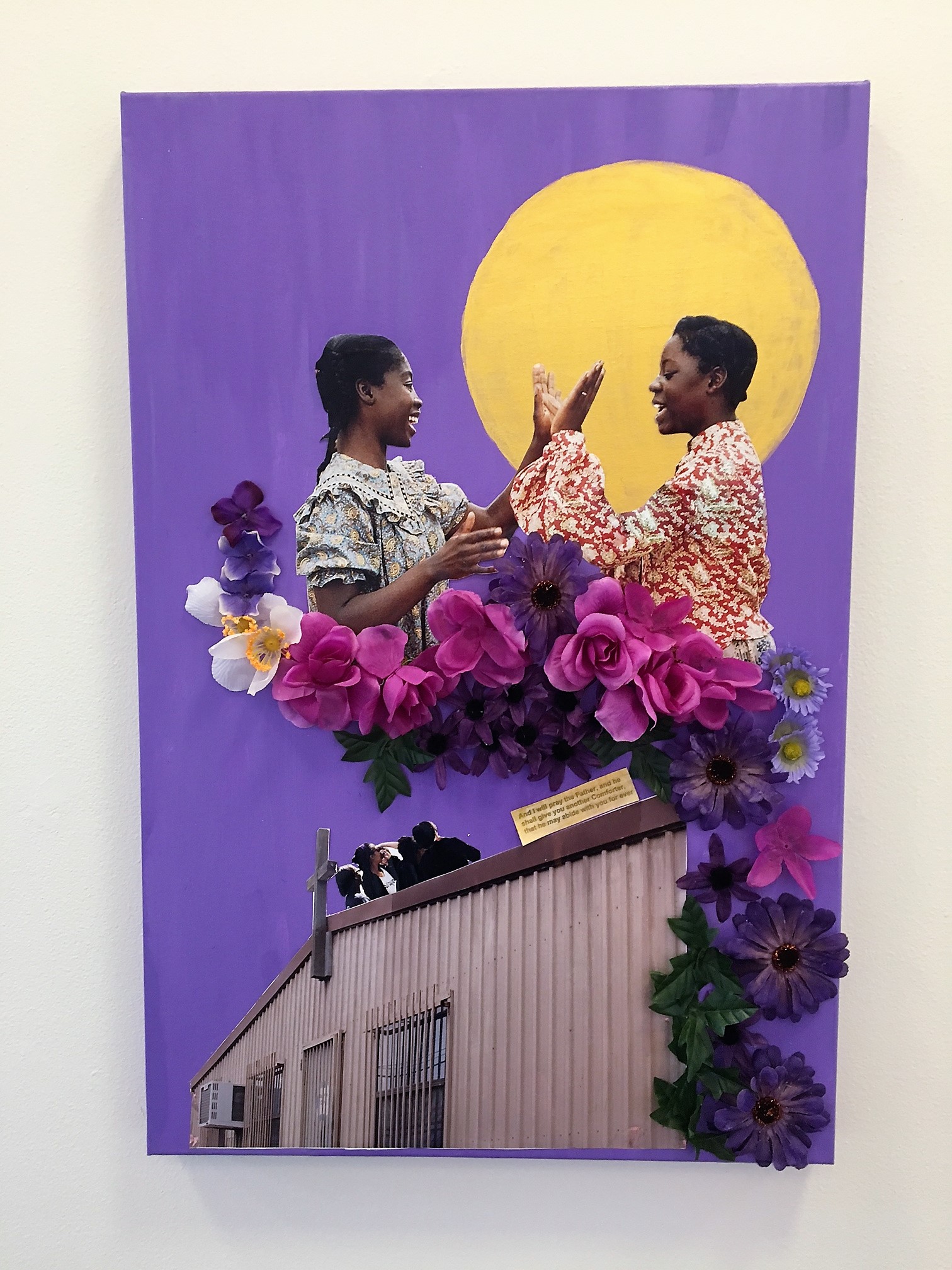
Her work “Goddesses in Hue” glorifies the black woman’s existence.
It came about as an extension of the original series [Goddesses] that I did digitally a few years ago. That was inspired by my desire to place black women in a light where we truly exist. For years I had been wanting to bring that digital collage to life in order to do more effective things with it. This new series was inspired by that desire.
I used a lot of photographs of a church on the corner of 12th Street and Airport Boulevard that I grew up around. The church is an anchor for me to have in this series. As a young black woman in East Austin, being around those areas and types of spaces was very integral to my upbringing.
I grew up Baptist. That is where my relationship with the divine came from; my first understanding of what the all-powerful is. That gave me direction in creating this reality of divinity when it comes to black women.
That also proved an inspiration for bringing the series together. I used the scripture to tell the story of each goddess in the series and their role in society, the universe and my personal life. I also used flowers to connect the different pieces, because flowers remind of me of birth, beauty and life, and that’s what all of these goddesses represent to me.
On the night of February 26, 2012, 17-year-old Trayvon Martin was walking back from a convenience store to his father’s place in Miami, Fl., wearing a hoodie, carrying with him a bag of skittles and an Arizona tea. Young Martin had no clue that he was being watched by “neighborhood police” Hispanic American George Zimmerman, who had alerted a Florida Police Department that he was on a suspicious-looking Martin’s trail.
That same night, millions of Americans would turn their TV’s, radios, and other devices on to the news Martin, a African American teenager, had been shot and killed by Zimmerman on his way home. A jury would later acquit Zimmerman for the second-degree and manslaughter of Martin, stating Florida’s ‘Stand Your Ground” law, which held the accused testimony that during their altercation, Zimmerman had no choice but to use self-defense. The verdict would spark and trigger a society so complex into formation that Black Lives Matter would be born.
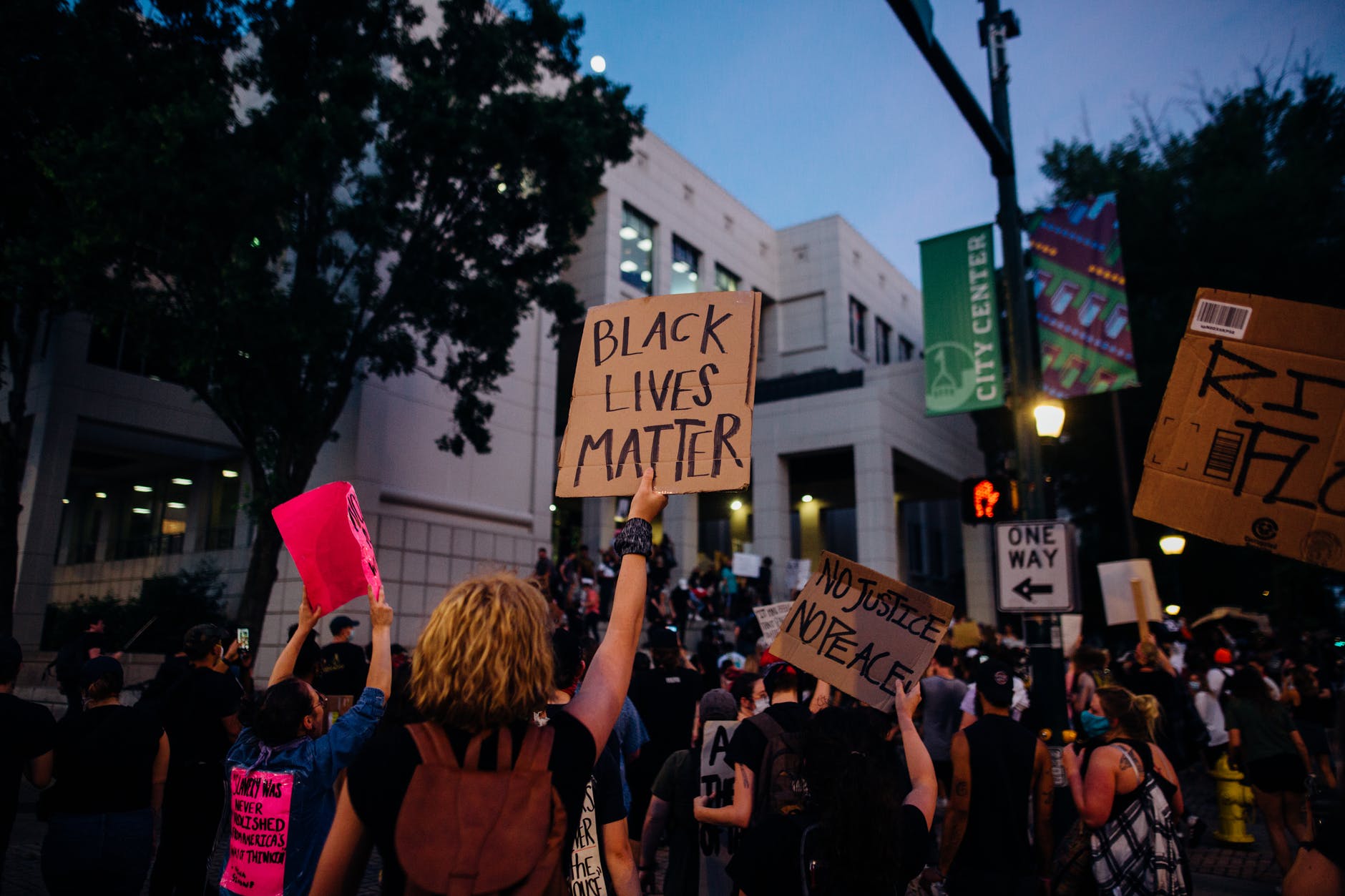
Often compared to the Civil Rights Movement, Black Lives Matter carries with them a weight that brings to life the colloquialism of “The audacity of…,” something that holds ground for a community that has been hit with a problem of police brutality and racially motivated violence. We as a nation witness this call for justice in the form of protests in our homes, schools, workplaces, streets, and parks. Hashtags on all social media platforms for Black Lives Matter, a still untrademarked organization, is used as a symbol of solidarity.
Founded by Alicia Garza, Patrisse Cullors and Opal Tometi, Black Lives Matter has since expanded into a global movement, recently, being nominated for a Nobel Peace Prize for their courageous efforts to change a broken system. Norwegian MP Petter Eide expressed in his nominations papers what the movement has meant for citizens worldwide.
“I find that one of the key challenges we have seen in America, but also in Europe and Asia, is the kind of increasing conflict based on inequality,” Eide said. “Black Lives Matter has become a very important worldwide movement to fight racial injustice.”
Martin’s untimely death was not the last to reach the world. It was a summer of quietness, the usual tourist-packed, and by-the-brand weekend for many of New York City’s residents.
On July 17, 2014, Eric Garner, a stout, tall black male, was approached by New York police officer Daniel Pantaleo under suspicion of illegally selling cigarettes. What transpired was Garner surrounded, grounded on his chest, with multiple officers on top. The last words he would utter, “I Can’t Breathe,” would soon become a hashtag used around the globe as shared video footage of a suffocating Garner darkened the nation.
Once again, the officers would not be charged for Garner’s death. A decision that incited protests from New York to California to Atlanta, shaping the racial tension between a society of people and the police. This time proving more thicker than ever with existential, detailed video footage.
Black Lives Matter and their underlining on the importance of using devices to record started to frame a discussion on the lengths of safety an individual, specifically black, must go through when being stopped and questioned by law enforcement. A conversation that we had not brought to the forefront in our society in years. For many, the movement for better policing had now been placed on an ongoing continuum.
Two months later the death of unarmed 18-year-old Michael Brown, two days shy of starting his first day of college in Ferguson MI. would be next.
On August 9, 2014, Police Officer Darren Wilson shot and killed Brown. In similarity to Zimmerman’s verdict, the grand jury decided not to indict Wilson, stating the officer used self-defense. As a result, the city of Ferguson witnessed unrest for weeks. Signs with the unofficial slogan “Hands Up, Don’t Shoot” would symbolize the current movement, while Black Lives Matter furthered their support, organizing a “Freedom Ride” of more than 500 African American protesters.
Black Lives Matter is more than just a street-protest operation. On more than one occasion they have demanded for more from national and local government, including reparations for African Americans, specifically, a universal income that would bring extreme ‘free’ relief to many homes living in poverty. In addition, an end to the jail system and the reformation of the prison system, a point of call to action that would be made clear following exposure of internees’ deaths.
Sandra Bland, a 28-year-old black Texas woman, was found hanging in a jail cell three days after being arrested during a traffic stop by Waller County State Trooper Brian Encinia.
Soon after, the public would get two videos – the one Bland herself recorded for little over 30 seconds and the police recorded video. Both videos including an exchange of a crying and screaming Bland.
The unusual events that lead to the death of Bland caused a common grief around the nation. Many questioned why and how a young advocate for Black Lives Matter and a Prairie View A&M Alumna, soon to be employed, would suicide in a county prison cell. Multiple calls for an investigation into her death were numerous, along with the hashtags #SayHerName and #SandraBland, which would gain major support like cases before, worldwide.
In a video posted on Black Lives Matter website, Garza, co- founder of the organization, expressed the disturbance that was felt the moment she and friends decided to create the new movement for names like Trayvon Martin and Sandra Bland.
“Black Lives Matter really starts because there is a generation of us desperate for something different, and while the Obama administration for many of us was like this is the opportunity where we can finally have those real conversations, instead white people were like racism over you got your black president then Trayvon Martin’s killed,” Garza said.
The movement continues to prove itself worthy of higher accolades with a reach of over 30 communities globally and goals in politics to end police brutality and injustice, moving at a critical speed with the support of multiple celebrities.
In 2016, football player Colin Kaepernick became a trending topic using his platform to support the Black Lives Matter by taking a solidarity knee during the national anthem in protest of the police shootings of Philando Castile, Alton Sterling, and Freddie Gray. Following the controversy, the organization continued to support Kaepernick’s efforts with motivated hashtags and pushes for him to be picked up by another team.
In that, Black Lives Matter has fueled a following of supporters that continue to challenge them to reach their goals through social media, word-of-mouth, and donations.
The Martin family’s case for justice did not end at the verdict, along with Black Lives Matter, they continue to fight for reform. In 2013, the family had reached a settlement with Florida for an unknown amount. The same can be said for Eric Garner’s, Michael Brown’s, and Sandra Bland’s families. Brown’s family received a 1.5 million insurance settlement with the city of Ferguson; New York City reached a settlement of 5.9 million with Eric Garner’s family, while Sandra Bland’s family received a settlement of 1.9 million in a wrongful death lawsuit against Waller County.
Now in their sixth year, Black Lives Matter has created a staple for themselves. While they have reached high points, they are still in the fight for justice. On May 25, 2020, George Floyd was stopped by Minneapolis police officer Derek Chauvin on suspicion of using a counterfeit $20 dollar bill to purchase cigarettes from a convenience store.
In the minutes following his arrest, Floyd had uttered the same words of Garner’s 20 times “I Can’t Breathe.” as Chauvin’s foot shoved into his neck.
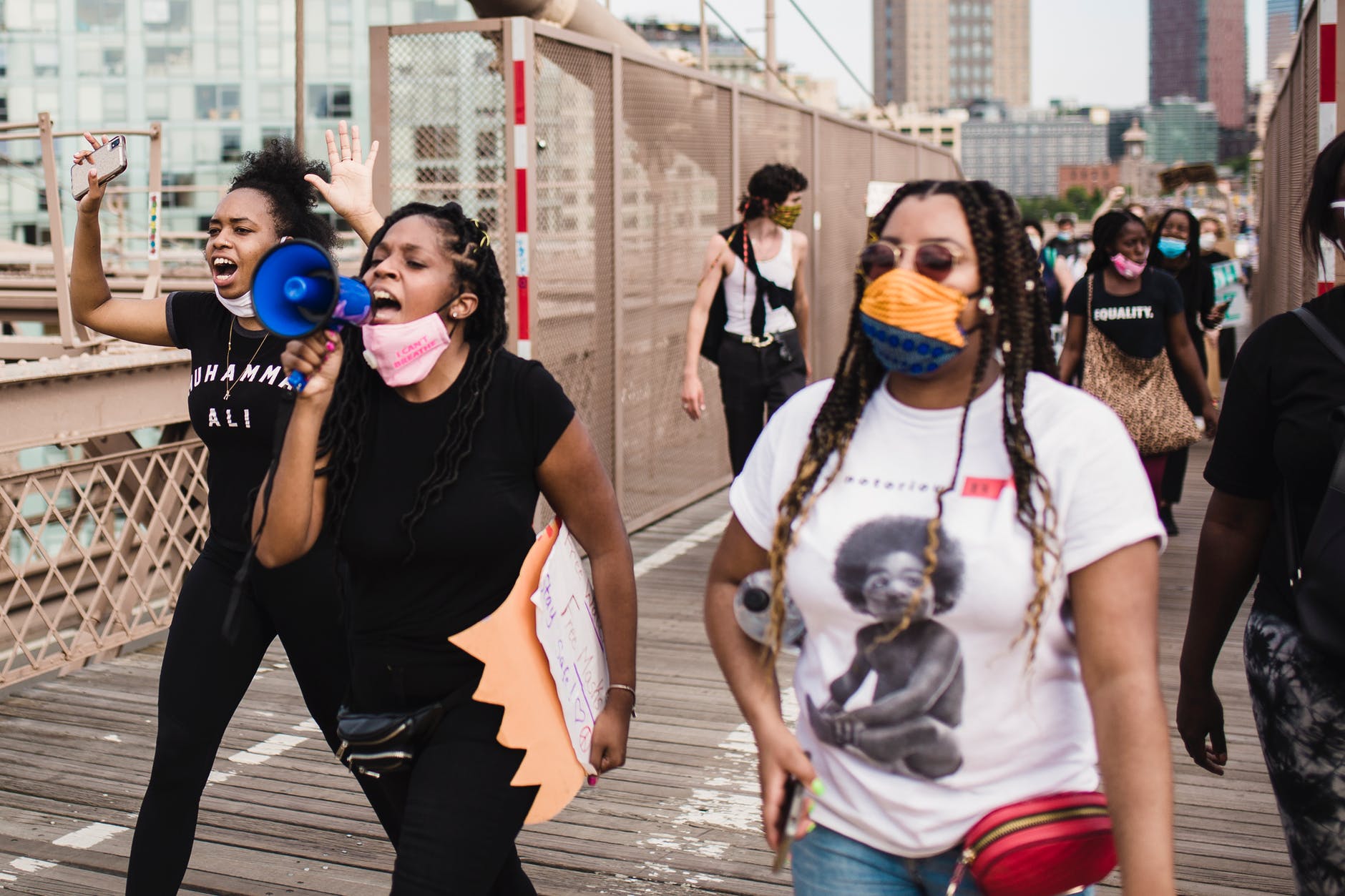
The killing of the 46-year-old African American man had caught the attention of thousands of protesters across the nation, many arriving in locations to support Black Lives Matter. Months later following Floyd’s death, Chauvin pleaded guilty to third-degree murder. He is still awaiting his trial.
Black Lives Matter continues to transcend the global spectrum. They are heard more than ever in times of injustice and in their fight for less names on a long list – in their fight for a world where a young, African American teenager wearing a hoodie, carry with him a bag of skittles and an Arizona tea makes it back home.
Terrant Payne, a black student with special needs, was arrested for the first time at his high school in the Round Rock school district after being caught in a fight that an administrator was forced to break up.
Sent to an alternative school, Payne was then arrested a second time for sleeping in class, behavior deemed “disruptive conduct.”
Three credits away from graduating, the 18-year-old has now been in jail for over a month.
Terrant is one of thousands of minority students who are disproportionately disciplined in schools across the nation.
Data from the U.S. Department of Education Office for Civil Rights shows that black students in grades K-12 are 3.8 times more likely to receive one or more out-of-school suspensions than their white peers; preschoolers are 3.6 more likely.
Again compared to white students, blacks are 1.9 times more likely to be expelled and 2.3 times more likely to be referred to law enforcement.
New truancy laws in Texas shifted the pressure to schools and parents. Effective Sept. 1, 2015, the policy change added a new requirement that all public schools implement truancy prevention programs.
As school districts adjust accordingly, two local nonprofits are continuing the fight to end school-to-prison pipeline patterns.
Through the system
One of those organizations is the Excellence and Advancement Foundation. Founded by Huston-Tillotson education professor Dr. Courtney Robinson, the group aims to combat the direct and indirect push out of young people from the school system to the juvenile justice and criminal justice system through prevention, intervention and education programs.
“We understand that the school-to-prison pipeline has no bounds when it comes to children of color… [minority students] are disproportionately disciplined in our schools… the data shows that over and over and over again,” Robinson told the Austin Urban Post.
Dr. Courtney Robinson, founder of the Excellence and Advancement Foundation, works with youth and young adults affected by the criminal justice system.
82,231 black students were suspended from Texas K-12 public schools in the 2011-2012 academic year, according to a study conducted by the Center for the Study of Race and Equity in Education at the University of Pennsylvania. At the time, blacks accounted for 13 percent of students in school districts across the state, 23 percent of expulsions and 31 percent of suspensions.
In recent years, out-of-school suspension rates overall have decreased by 20 percent, according to the 2013-2014 Civil Rights Data Collection. But still, discriminatory patterns continue to plague the system.
“I think the biggest problem is that children of color are under too much surveillance. They are watched more than other kids, so it fits that they are perceived as the ones acting out,” Robinson said.
She has been working with the Payne family.
At the time of Terrant’s first arrest, they were amid the process of scheduling a hearing to evaluate his special education needs; trying to put some things in place that would make him more successful at school.
Robinson visits Terrant in jail. “He’s not out yet because his family can’t afford to get him out. I’ve just been telling him he’s not going to be there forever, and that he will graduate from high school and have a life; trying to keep him focused and positive,” she said.
His mother Charmetha Payne said that it’s been awful since her son has been gone, but getting updates from Robinson on his well-being has helped put her at ease.
“They keep me in the loop of what’s going on,” she said. “They let me know how he looks, how he’s doing, things like that. If it wasn’t for them, I wouldn’t otherwise know because I don’t have funds to send to him so that we can make contact over the phone.”
Robinson described the ordeal as a distinctive school-to-prison case, but envisions a success story for Terrant as they work to figure out the best schooling situation for him.
Outside the box
Since 2014, the U.S. Department of Education and Justice has sent guidelines to school districts designed to avert “zero tolerance” discipline policies. Aimed at potentially harmful behavior, these policies have disproportionately impacted minority students.
Many schools across the nation have implemented a model of “restorative discipline,” which consists of holding constructive conversations to facilitate relationships and reconciliation.
Locally, too, foundations are working outside of the system, using “purpose-driven” leadership models to help students think beyond the scope of a classroom.
AMP360 is working to connect communities and create young leaders through social entrepreneurship.
“We want to teach skills. We want to create opportunities for kids from marginalized communities. But we also want to uplift the whole community through whatever it is they are learning,” said co-founder Claire Morel.
Morel said the idea for the organization was conceptualized after noticing that the real issues in Texas exist at the intersection of education and justice. AMP360 openly recognizes that black and brown students are punished at higher rates than their peers.
“A lot of kids fall through the cracks because they are not being stimulated,” said Morel. “In many ways, they are being taught by educators who don’t understand them, their culture or their reality.”
Morel and co-founder Freddy Womack work with middle and high school students on cultivating community-based projects.
“Kids who know they are engaged in something important; who know they matter; who know that what they’re going through matters; who feel like they have an active role in changing the world they live in,” said Morel. “Those are not kids who want to be on the block hanging out doing whatever.”
The Excellence and Advancement Foundation is set to open its newest location at Huston Tillotson’s Community Health and Wellness Center January 2017
Similar to Morel’s concept, The Excellence and Advancement Foundation’s Black Leadership Academy, designed for third through 12th-graders, seeks to provide a broader and more inclusive understanding of our country’s history.
The goals of the academy are to improve racial identity, academic engagement, college readiness and community engagement, according to their website.
“[We give]… students a space where they feel safe and comforted, because often times there are microaggressions happening in schools that black students have to deal with every single day,” said Robinson.
Chalisa Warren decided to put her fourth grade daughter in Robinson’s program because she wanted to reinforce and emphasize how African history played such an important role in American history.
“I think, as kids get older, they want to become more inquisitive…” said Warren. “If you give them a sense of pride early on, I think they will be more accepting of themselves and others as they [build] their life.”
Warren’s daughter, who is the only minority in her class at the academy, is now is able to think outside of what she reads in school curriculum.
“She can put that into a better perspective because she now has a little bit more of a foundation to know that, at some point, we can insert ourselves here because we were leaders and kings in Africa as well,” Warren said.
Derek Chauvin, former Minneapolis Police Officer, was found guilty on all charges of murder and manslaughter in a Minnesota court by a jury for the death of George Floyd.
Minnesota Gov. Tim Walz (D) issued a statement after the verdict.
“Minnesota mourns with you, and we promise the pursuit of justice for George Floyd does not end today,” Walz said. “True justice for George Floyd’s family only comes from real, systematic change to prevent this from happening again.”
Chauvin chose to not testify during his trial before the final verdict. “I will invoke my Fifth Amendment privilege today,” he said. When asked by the judge if it was his decision to make that choice, he continued, “It is, your honor.”
The jury was given two sides of who George Floyd was: a family guy who was working to build a better life and a man who struggled sometimes with wrong decisions while with friends.
On May 25, 2020, Floyd walked into Cups Food convenience store to buy a pack of cigarettes, in which he purchased with a counterfeit $20 dollar bill. Christopher Martin, a 19-year-old store clerk, testified that once he noticed the fraudulent bill he tried multiple times to get Floyd and his friends to return to the store. Martin’s manager then called 911 to report a ‘stubborn’ Floyd.
In the minutes following, the altercation had escalated with police as Floyd was pinned down to the ground pleading for his life saying “I am not a bad guy.” Video footage proved that Chauvin had Floyd positioned with his knee on his neck for more than eight minutes without oxygen.
The killing of the 46-year-old African American man caught the attention of thousands of protesters across the nation, igniting a outcry for justice.
In the months following Floyd’s death, The former police officer pleaded guilty to third-degree murder.
President Biden and First Lady Jill Biden, along with, Vice President Kamala Harris spoke with George Floyd’s family following the verdict to let them know that this is not the end.
Biden and Harris also addressed the nation on the steps forward.
“Here’s the truth about racial injustice,” Harris said. “It is not just a Black America problem or a people of color problem; it is a problem for every American…It is holding our nation back from realizing our full potential.”
President Biden followed with words of solidarity. In addition, he spoke on their combination rally for lawmakers to pass the George Floyd Justice in Policing Act.
“No one should be above the law and today’s verdict sends that message,” Biden said. “But it’s not enough. We can’t stop here.”
The verdict was delivered after 10 hours of deliberations over two days. Chauvin is facing 12 years to life in prison.
Actress Shailene Woodley is set to play in Black Bear Pictures’ film ‘Dumb Money,’ alongside actor and comedian Pete Davidson, both as individuals intertwined in a David-vs-Goliath risk factor where tech-savvy hackers break into the stock market, with GameStop as the best bet.
The screenplay for the film will come from Rebecca Angelo and Lauren Schuker Blum, also executive producers for the much-anticipated film, based on Ben Mezrich’s book The Antisocial Network, where a struggle for the stock market climate is impacted through internet trolls and Reddit-ers, for a culturally, defining war against one of the biggest hedge funds on Wall Street.
Money cast will also include actors Paul Dano, Matt Reeve, Seth Rogen and Sebastian Stan. This will be the first time Davidson and Woodley will take part in a feature film together. The Fault in Our Stars actress has been busy with her current roles and own endeavors, including HBO’s upcoming show Three Women, and set to star in Robots, a science fiction comedy film, with actor Jack Whitehall from The Bad Education.
Former SNL host Davidson has been playing dual roles, starring in his own film King of Staten Island and dedicated to his recurring role in ABC’s The Rookie. Ryder Picture Company has partnered up with Black Bear’s Teddy Schwarzman. Michael Heimler, John Friedberg, and Mezrich are also executive producers, with Andrew Swett, Johnny Holland, Tyler and Cameron Winklevoss, and Kevin Ulrich.